Saturday, August 4, 2012
The Amazing Spider-Man Movie Review
So, thanks to a wonderful gift from a friend I was able to see Maria on Thursday, and off we went to see the one movie we'd promised to wait to see together: The Amazing Spider-Man! We got into the movie theatre, sat down, and well... gosh, I like this movie. So very, very, very much... I'll break it down into a few parts: story, casting, and accuracy. I'll use this review to refute a few of my friends who did not like the movie as much, and use this as a platform for why I think this really is the best Spider-Man movie ever made.
Story
Webb took a very unexpected direction with his reboot by going back to Spidey's origins and working his own story within it. The story is no longer just about "power and responsibility", but about Peter's maturation into someone who no longer uses the abandonment of his parents as an excuse to have a low self-image. Peter's powers are not there for their own sakes, but are used to further highlight Peter's exploration of himself as a maturing adult. Every element of the story serves to show Peter's self-exploration, and the movie really only makes sense in that context. It's a story about being a teenager, really, and the fact that Webb knows this and makes sure that everything serves that end is nothing less than stellar.
Casting
Oh.. my... God... THAT WAS PETER PARKER, FOLKS! That was him! YES! You have no idea how happy I am that someone finally made a movie that actually showcased Peter Parker, and not some whiny boy pretending to be him... oh wait... that's not what I'm supposed to be saying, is it? Oops, too bad. Andrew Garfield is Peter Parker. I officially cannot imagine anyone else playing Spider-Man, not ever again. Everyone else's casting was pretty damn good (especially Emma Stone as Gwen Stacy), but it's Garfield's casting as Peter Parker that makes this movie so damn good. If it had been handed to anyone else, it just wouldn't have worked the same way, and considering that I like this way, that'd be a crying shame. Garfield gets Peter Parker and Spider-Man, and that's something that's beyond beautiful to watch on the big screen.
Seriously, props to the whole damn cast.
Accuracy
This is the only movie I've ever seen where Spider-Man moved like Spider-Man. From fighting like a little chicken-shit to his webslinging to his wise-cracks to his heroism, this Spider-Man looked like, sounded like, and felt like Spider-Man in a way that no other film has ever been able to achieve. While they took more than a few liberties with the story (like not having the criminal show up ever again in the movie) it made me believe in Peter Parker in a way the comics never did. It may not be 100% accurate, but like the Nolan films I find that The Amazing Spider-Man got Spider-Man so well that I frankly couldn't care less.
The only thing holding this film back? There were three films before it, all of which presented a very different (and flawed) vision of Spidey that's going to stick in my mind no matter how hard I try to get them out. Seriously, I'm thinking of junking my original Spider-Man DVD just so I can replace it with this movie when it comes out...
8/10, for being awesomesauce.
The City's Lights: Tomoya
There are a lot of reasons why I like Clannad, but I really think the primary reason is because of Tomoya, and the conflict that is within him, and within the hearts of every single character examined in this story. What's the conflict?
Accepting love.
It's probably the most difficult thing in the world to do, and yet so few stories talk about it. But how many people do you know that have good lives and yet are miserable anyway? Tomoya's story is their own, that of the person who has something in their life that makes the rest of it seem unbearable, no matter how small it may appear to the outsider. But the outsider's opinion really isn't what matters, is it? You have your issue, and until someone takes it seriously it's not going to be resolved. Clannad is about Tomoya's attempts to change his life so he can finally accept the love of those around him. And the world/God is willing to do everything it takes to help him do this, even rewind time itself when Tomoya finally realizes that he won't regret being with Nagisa.
See, the reason why Tomoya got his rewind was because he had a wish, and refused to use it. The episode where Nagisa dies is where Tomoya's real issue with life comes out.
Bad things happen to good people, and some people can barely take that. Tomoya happens to be one of those people.
Fortunately, however, Ushio gives him the opportunity to use his wish again, and Tomoya FINALLY makes the decision to bring Nagisa back, but at the cost of losing his internal bitterness that bad things have to happen for good things to flourish all the more in this world. This isn't some cliche "you have to do bad things for good reasons" bullcrap, but the legitimate knowledge that bad things that happen to you can lead to even better things in the future. It's a message that's extremely hopeful and, ultimately, really touches on what all good stories are about: good prevails, even if it takes a little bit of time to get there. As the Count of Monte Cristo says "Wait and hope"...
Accepting love.
It's probably the most difficult thing in the world to do, and yet so few stories talk about it. But how many people do you know that have good lives and yet are miserable anyway? Tomoya's story is their own, that of the person who has something in their life that makes the rest of it seem unbearable, no matter how small it may appear to the outsider. But the outsider's opinion really isn't what matters, is it? You have your issue, and until someone takes it seriously it's not going to be resolved. Clannad is about Tomoya's attempts to change his life so he can finally accept the love of those around him. And the world/God is willing to do everything it takes to help him do this, even rewind time itself when Tomoya finally realizes that he won't regret being with Nagisa.
See, the reason why Tomoya got his rewind was because he had a wish, and refused to use it. The episode where Nagisa dies is where Tomoya's real issue with life comes out.
Bad things happen to good people, and some people can barely take that. Tomoya happens to be one of those people.
Fortunately, however, Ushio gives him the opportunity to use his wish again, and Tomoya FINALLY makes the decision to bring Nagisa back, but at the cost of losing his internal bitterness that bad things have to happen for good things to flourish all the more in this world. This isn't some cliche "you have to do bad things for good reasons" bullcrap, but the legitimate knowledge that bad things that happen to you can lead to even better things in the future. It's a message that's extremely hopeful and, ultimately, really touches on what all good stories are about: good prevails, even if it takes a little bit of time to get there. As the Count of Monte Cristo says "Wait and hope"...
Monday, July 30, 2012
5 Common Sense Things Burning Wheel Taught Me
I just finished my first campaign of Burning Wheel yesterday, and I'm more than impressed with the game, because it is EXACTLY what I hoped it would be. This is a brilliant game, the best that I've played so far, and I've learned much from it about gaming in general. But the best five things I've learned are the following:
5. Accept a Game for What It Is
There just isn't any other way to state it: experiencing one game does not mean you've experienced them all, and the experiences you've had might not transfer over. This is pretty difficult to accept in our RPG culture because of the prevalence of Dungeons and Dragons, Pathfinder, and World of Darkness. Once you get outside of the mainstream games, however, the play experience becomes wildly different. I don't know how often I've had to take basic assumptions about GM'ing and throw it right out the window so that way I could run this game properly. Seriously, secretiveness was the hardest thing for me to change in my GM'ing style for this game, but I'll get better at it...
4. Collaboration is Key
Oof, this one's not too easy either, especially with our biggest RPGs putting all the world-building and story duties on the DM. I've found that having everyone else help make the world makes it so much easier on me that I think I'll just make it mandatory from now on in whatever game I'm running. Collaboration in everything makes GM'ing more pleasurable and easier, and really makes the playing as cooperative as I've always wanted.
3. Everyone Needs to Read the Damn Rules
This is so basic I wonder why people don't just do this as a courtesy, but most of the people I've met who play D&D never really bother to learn the rules, because the DM does everything already, so why not leave everything to him? Not quite in Burning Wheel. Players are expected to know the rules, and the reasons for that start to get painfully obvious once you realize that you have to stop the game and read the rules out loud for the third time because no one else bothered to look the up...
2. Gamers Play What They're Rewarded For
A simple act of human nature: people are more likely to do actions they're rewarded for. That's why you get psychopaths who believe that humans aren't intrinsically good, because we reward good behavior (If we aren't good intrinsically why do we reward good behavior?). This carries into all our interactions, games especially. It's also something that's very frustrating to not understand (particularly when you try to get a real story going and your players just wanna kill the monsters and take their treasure) and to try to counter. Don't counter that instinct, run with it!
1. One Size Does Not Fit All
By the time the campaign finished, it became obvious which out of the seven people actually liked Burning Wheel for what it was and wished to play the game itself. I'll give you a quick hint, it's less than half, and that's OK. Different games scratch different itches, and that may be the most important thing to walk away from. A game cannot be everything for everyone, because it'll wind up being a crappy game for no one.
5. Accept a Game for What It Is
There just isn't any other way to state it: experiencing one game does not mean you've experienced them all, and the experiences you've had might not transfer over. This is pretty difficult to accept in our RPG culture because of the prevalence of Dungeons and Dragons, Pathfinder, and World of Darkness. Once you get outside of the mainstream games, however, the play experience becomes wildly different. I don't know how often I've had to take basic assumptions about GM'ing and throw it right out the window so that way I could run this game properly. Seriously, secretiveness was the hardest thing for me to change in my GM'ing style for this game, but I'll get better at it...
4. Collaboration is Key
Oof, this one's not too easy either, especially with our biggest RPGs putting all the world-building and story duties on the DM. I've found that having everyone else help make the world makes it so much easier on me that I think I'll just make it mandatory from now on in whatever game I'm running. Collaboration in everything makes GM'ing more pleasurable and easier, and really makes the playing as cooperative as I've always wanted.
3. Everyone Needs to Read the Damn Rules
This is so basic I wonder why people don't just do this as a courtesy, but most of the people I've met who play D&D never really bother to learn the rules, because the DM does everything already, so why not leave everything to him? Not quite in Burning Wheel. Players are expected to know the rules, and the reasons for that start to get painfully obvious once you realize that you have to stop the game and read the rules out loud for the third time because no one else bothered to look the up...
2. Gamers Play What They're Rewarded For
A simple act of human nature: people are more likely to do actions they're rewarded for. That's why you get psychopaths who believe that humans aren't intrinsically good, because we reward good behavior (If we aren't good intrinsically why do we reward good behavior?). This carries into all our interactions, games especially. It's also something that's very frustrating to not understand (particularly when you try to get a real story going and your players just wanna kill the monsters and take their treasure) and to try to counter. Don't counter that instinct, run with it!
1. One Size Does Not Fit All
By the time the campaign finished, it became obvious which out of the seven people actually liked Burning Wheel for what it was and wished to play the game itself. I'll give you a quick hint, it's less than half, and that's OK. Different games scratch different itches, and that may be the most important thing to walk away from. A game cannot be everything for everyone, because it'll wind up being a crappy game for no one.
Saturday, July 21, 2012
Why the Modern XP System Sucks
Y'know, a while back while I was playing DnD, I realized I'd gotten tired of using XP to track advancement. It seemed dumb to tally up numbers that meant nothing beyond how close you were to leveling up and getting shiny new stuff. Could you get that new stuff immediately? Of course not, you had to wait for... I don't know why, truth be told. I mean, anytime I asked people, they'd just shrug their shoulders and say "I don't know, it's just that way". I'd shrug my shoulders too, and keep attempting to make epic plots that didn't work.
Of course, leave it to Carpe to start asking questions and making it even more difficult for me to accept a system that makes no sense outside of its OD&D origins, where gold was XP, and that the gold was supposed to get you more items in the meantime until your character "got it" and leveled up. I mean, if you use XP in that way, it does make sense. You go into a dungeon, and get the most XP for getting the gold. This gold goes towards advancing your character and may then be used to buy better items, which will keep your character alive longer, allowing him to level up. See, that system makes sense, especially with D&D's origins as a dungeon raid. Since monsters didn't give as much XP and killed you significantly faster than gold you didn't want to fight them, which is why wandering monsters were a bad thing. So, in OD&D's context, XP made for a very tight and gripping game, as you attempted to get to the gold without dying a horrible death. Sometimes you succeeded, and sometimes you didn't.
So why do a lot of modern games (video games like Mass Effect included) have this XP system without tying it to wealth, like it was originally intended? If I had to guess, I'd say tradition. With D&D being the definitive RPG of the first 30 years of the hobby's life, most people grew up with this system and had it ingrained in them. It's just a case of "this is the way things have always been done". The problem with this thinking, of course, is that whenever you change the reward system in a game, you change the very way the game is played. The rest of the mechanics almost don't matter in comparison to this one rule. If your game has a good and clear resolution mechanic it will be incredible. If there isn't a clear rewards mechanic then why bother?
...which where I'm at with modern D&D and, to a lesser degree, with Pathfinder. Great. World of Darkness at least reduces the amount of XP, but it gives no clear answer to the problem, either. It's like the major RPGs we've attached ourselves to have no idea how to be designed or something, and have forgotten the very basic rule of gaming: the game is as good as the rewards given in it.
So, here's a question: is it possible for 4th edition and Pathfinder to have this style of play re-integrated with little trouble? Now that's an interesting question...
Of course, leave it to Carpe to start asking questions and making it even more difficult for me to accept a system that makes no sense outside of its OD&D origins, where gold was XP, and that the gold was supposed to get you more items in the meantime until your character "got it" and leveled up. I mean, if you use XP in that way, it does make sense. You go into a dungeon, and get the most XP for getting the gold. This gold goes towards advancing your character and may then be used to buy better items, which will keep your character alive longer, allowing him to level up. See, that system makes sense, especially with D&D's origins as a dungeon raid. Since monsters didn't give as much XP and killed you significantly faster than gold you didn't want to fight them, which is why wandering monsters were a bad thing. So, in OD&D's context, XP made for a very tight and gripping game, as you attempted to get to the gold without dying a horrible death. Sometimes you succeeded, and sometimes you didn't.
So why do a lot of modern games (video games like Mass Effect included) have this XP system without tying it to wealth, like it was originally intended? If I had to guess, I'd say tradition. With D&D being the definitive RPG of the first 30 years of the hobby's life, most people grew up with this system and had it ingrained in them. It's just a case of "this is the way things have always been done". The problem with this thinking, of course, is that whenever you change the reward system in a game, you change the very way the game is played. The rest of the mechanics almost don't matter in comparison to this one rule. If your game has a good and clear resolution mechanic it will be incredible. If there isn't a clear rewards mechanic then why bother?
...which where I'm at with modern D&D and, to a lesser degree, with Pathfinder. Great. World of Darkness at least reduces the amount of XP, but it gives no clear answer to the problem, either. It's like the major RPGs we've attached ourselves to have no idea how to be designed or something, and have forgotten the very basic rule of gaming: the game is as good as the rewards given in it.
So, here's a question: is it possible for 4th edition and Pathfinder to have this style of play re-integrated with little trouble? Now that's an interesting question...
Tuesday, July 17, 2012
Favorite Movies
This list isn't inclusive, by any means, but it's a pretty good indication of what I find to be worthwhile. These movies will not be ordered, because (unlike TV shows) I'm not in as picky of a mood whenever I sit down to watch a movie. There isn't as much of a time investment involved, so I generally don't worry about what's my "favorite"
The Dark Knight
The Dark Knight is one of those movies that practically defined the year I watched it. And it wasn't just because I found myself liking the silly Batman voice that Christian Bale uses. Honestly, Heath Ledger's performance practically defined what I wanted out a villain: despairing to the point of insanity. The Dark Knight was the refutation of despair by whatever means were available, moral or not, and I found the ride quite gripping and enjoyable. I usually watch it when I'm in a more thoughtful and dark mood, and just want to watch Joker get defeated again.
Avengers
To quote myself for the vast majority of this movie: "HOLY SHIT, THAT WAS AWESOME!" I'm not gonna lie, this is probably the lightest movie on the whole list, but that's because every frame screams of win. Ever. Single. Solitary. Frame. This is a movie I'm buying when it comes out on DVD for sure.
House of Flying Daggers
I consider myself a martial arts film fan, although I probably don't know as much about someone who's truly obsessed with the subject. Mostly this is because the martial film industry, with its high flying wires and bad stories, has a habit of defeating itself by trying to have a story that it just can't have.
Not this movie.
This movie is one of the few films I've seen that is a true and heartfelt take on this genre, and soars about almost all other martial arts films by being a story, first and foremost, with some of the most kick-ass fighting and choreography you'll ever see. And the ending scene is possibly one of the most visually pleasing things in all cinema.
Hero
This is the most beautiful movie I've ever seen, as far as aesthetic visuals go. Just... period. Wow. The plot, while not as good as House of Flying Daggers, is still excellent, and the fight scenes fit with the movie in a way that's very difficult to describe. There's a refinement and grace to this film that's so beautiful and breath-taking I can't help but love it.
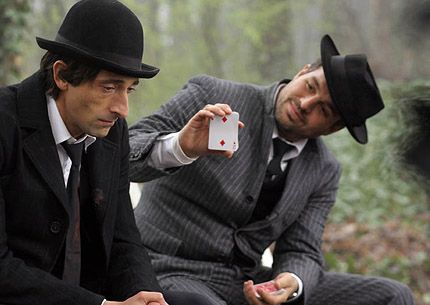
Brothers Bloom
Call me a sucker for Mark Ruffalo, but... damn... I like him in this movie a lot. Combine that with all the neat visual tricks this movie has, and I can guarantee that you'll find something new going on every time you watch it.
Inception
This is a movie that I'll watch time and time again for... well... I'm never quite sure, really. There's something captivating about it that makes me very very glad I've watched it. Maybe it's because of my years as a GM, but I find the concept of people being able to invade and mold other people's dreams to be too good of an exploration to pass up.
The Original Star Wars Trilogy
Dude, I can't think of a person who hasn't watched Star Wars. These movies were easily the most watched of my childhood, and instilled a love fantasy that I have never been able to shake (nor do I wish to, thank you). The trilogy of Luke Skywalker becoming a man can always be popped in at my house without a complaint.
Lucky Number Slevin
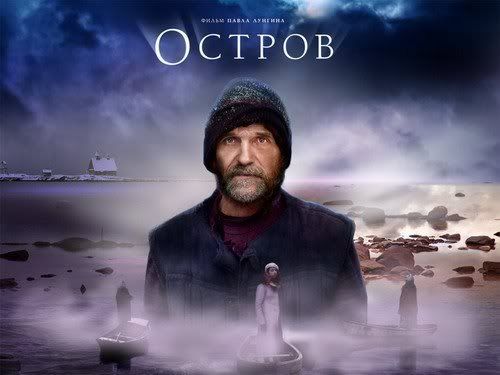
Ostrov
Ostrov is a Russian film about a monk living in the North Sea. He's a holy fool who is trying to repent for murdering a man. The film is... I don't know if I can quite explain this film. It's mood and message are very difficult to just communicate in any amount of writing, and I honestly don't know if anyone could catch it upon first watching. This movie is truly beautiful, however. I'd heartily recommend finding it and watching it.
The Dark Knight
The Dark Knight is one of those movies that practically defined the year I watched it. And it wasn't just because I found myself liking the silly Batman voice that Christian Bale uses. Honestly, Heath Ledger's performance practically defined what I wanted out a villain: despairing to the point of insanity. The Dark Knight was the refutation of despair by whatever means were available, moral or not, and I found the ride quite gripping and enjoyable. I usually watch it when I'm in a more thoughtful and dark mood, and just want to watch Joker get defeated again.
Avengers
To quote myself for the vast majority of this movie: "HOLY SHIT, THAT WAS AWESOME!" I'm not gonna lie, this is probably the lightest movie on the whole list, but that's because every frame screams of win. Ever. Single. Solitary. Frame. This is a movie I'm buying when it comes out on DVD for sure.
House of Flying Daggers
I consider myself a martial arts film fan, although I probably don't know as much about someone who's truly obsessed with the subject. Mostly this is because the martial film industry, with its high flying wires and bad stories, has a habit of defeating itself by trying to have a story that it just can't have.
Not this movie.
This movie is one of the few films I've seen that is a true and heartfelt take on this genre, and soars about almost all other martial arts films by being a story, first and foremost, with some of the most kick-ass fighting and choreography you'll ever see. And the ending scene is possibly one of the most visually pleasing things in all cinema.
Hero
This is the most beautiful movie I've ever seen, as far as aesthetic visuals go. Just... period. Wow. The plot, while not as good as House of Flying Daggers, is still excellent, and the fight scenes fit with the movie in a way that's very difficult to describe. There's a refinement and grace to this film that's so beautiful and breath-taking I can't help but love it.
Brothers Bloom
Call me a sucker for Mark Ruffalo, but... damn... I like him in this movie a lot. Combine that with all the neat visual tricks this movie has, and I can guarantee that you'll find something new going on every time you watch it.
Inception
This is a movie that I'll watch time and time again for... well... I'm never quite sure, really. There's something captivating about it that makes me very very glad I've watched it. Maybe it's because of my years as a GM, but I find the concept of people being able to invade and mold other people's dreams to be too good of an exploration to pass up.
The Original Star Wars Trilogy
Lucky Number Slevin
This is a movie I watch whenever I'm in the mood for something funny and dark, because well... just watch the movie. The ending is awesomely dark, but the rest of the movie is sweet and hilarious.
Ostrov
Ostrov is a Russian film about a monk living in the North Sea. He's a holy fool who is trying to repent for murdering a man. The film is... I don't know if I can quite explain this film. It's mood and message are very difficult to just communicate in any amount of writing, and I honestly don't know if anyone could catch it upon first watching. This movie is truly beautiful, however. I'd heartily recommend finding it and watching it.
Monday, July 9, 2012
Why Do We Do This? Part 2
Following up on an earlier post I'd written, I've been thinking about why people play RPGs. I'm not entirely happy with what I've got, so far, but I'll recount a few of the experiences that have defined why I love this type of game so much.
First, of course, is the awesomeness of Hell's Gambit. That's still the best role-playing experience I've ever had, although the other incidents I'm about to describe come close...
In a World of Darkness game we were recently playing, one of the NPCs named Leona freaked out and refused to help us in our war on the Fae. Maria's character, Ivy, gave an amazing speech and turned the whole thing around. It was a big moment in the game, and probably the most impactful (to me, but I'm biased) one we had in the whole game. It had genuine drama to it, and I felt like I'd met and interacted with someone... real isn't the right word, but it's what I got, so it's what I'll use.
The first full session of my current Burning Wheel game is based on Ireland around the time of the Romans forsaking that area of the world, with fae thrown in (noticing a theme here?). One of my players (my sister, actually), was the daughter of the king who had unified three different tribes under him and tried to make a "new Rome" in Ireland. Colleen (Anna's character) had to say good-bye to her childhood friend, an elf who had been cursed by her wicked twin sister. In what was a heart-wrenching scene, the elf finally told her friend of twenty years what her true name was, Autumn, and walked into the forest, telling Colleen she'd probably see the elf before the elf saw her again. It's still Colleen's driving motivation to find out what happened to Autumn and do whatever she can to avenge her friend.
Another one of my favorite moments comes from the same game Hell's Gambit is based, where Didier the elf shot one arrow, killed 1,000 enemies, and opened a rift in reality, causing it to almost collapse in on itself. What was interesting was how everyone reacted, from the schizo-Gant to the more sensibly minded Eela. There was a lot of drama as the group imploded on itself trying to figure out how in the world to fix the rift and the arguments that followed after the rift was actually closed.
See, I haven't quite it all put together yet, but if someone was to ask me why I'd want other people to play RPGs, I'd point to these moments and say: "So you can have experiences like this". I'll ponder a bit more, but there ya have it.
First, of course, is the awesomeness of Hell's Gambit. That's still the best role-playing experience I've ever had, although the other incidents I'm about to describe come close...
In a World of Darkness game we were recently playing, one of the NPCs named Leona freaked out and refused to help us in our war on the Fae. Maria's character, Ivy, gave an amazing speech and turned the whole thing around. It was a big moment in the game, and probably the most impactful (to me, but I'm biased) one we had in the whole game. It had genuine drama to it, and I felt like I'd met and interacted with someone... real isn't the right word, but it's what I got, so it's what I'll use.
The first full session of my current Burning Wheel game is based on Ireland around the time of the Romans forsaking that area of the world, with fae thrown in (noticing a theme here?). One of my players (my sister, actually), was the daughter of the king who had unified three different tribes under him and tried to make a "new Rome" in Ireland. Colleen (Anna's character) had to say good-bye to her childhood friend, an elf who had been cursed by her wicked twin sister. In what was a heart-wrenching scene, the elf finally told her friend of twenty years what her true name was, Autumn, and walked into the forest, telling Colleen she'd probably see the elf before the elf saw her again. It's still Colleen's driving motivation to find out what happened to Autumn and do whatever she can to avenge her friend.
Another one of my favorite moments comes from the same game Hell's Gambit is based, where Didier the elf shot one arrow, killed 1,000 enemies, and opened a rift in reality, causing it to almost collapse in on itself. What was interesting was how everyone reacted, from the schizo-Gant to the more sensibly minded Eela. There was a lot of drama as the group imploded on itself trying to figure out how in the world to fix the rift and the arguments that followed after the rift was actually closed.
See, I haven't quite it all put together yet, but if someone was to ask me why I'd want other people to play RPGs, I'd point to these moments and say: "So you can have experiences like this". I'll ponder a bit more, but there ya have it.
Monday, June 25, 2012
The City's Lights: Nagisa
My apologies about the long hiatus, work shifted around and I needed some time to adjust. Oh, and it doesn't help that I don't have internet at my house either. Here's the next part of the The City's Lights.
Nagisa really is the heroine of Clannad. No matter what you may think of Tomoyo and Kyou, Nagisa is the lady that Tomoya comes back to, time and time again. A lot of people wonder why in the world Tomoya chose Nagisa, of all people, to be his wife. The sheer amount of Tomoyo and Kyou ecchi on the interwebs is enough proof of the fact that people think Tomoyo and Kyou are much much sexier than Nagisa, and the fact that there's an entire game about Tomoya and Tomoyo proves that Nagisa really doesn't have to be the one for Tomoya. In fact, come to think of it, there's pretty much no obvious advantage that Nagisa has over Tomoyo (sorry Kyou fans, but she's not really in the running at this point. Nagisa and Tomoyo are too awesome). In fact, Tomoyo has much more in common with Tomoya than Nagisa does, especially at the beginning of Clannad. The two start at a very similar point, wishing to redeem themselves of their former life of being delinquents.
And that very well may be the reason why, come to think of it.
As of recently I've been discussing analytical psychology with my friend, Marty (the guy who introduced me to Clannad, ironically enough). We talked about the fact that everyone has what's called "the shadow" side of their personality. Essentially it's the underdeveloped part of someone's psyche that starts to get developed as part of a person's maturation. Essentially as you grow up you start to work on the parts of yourself that didn't get so much development as a child. The trick is to let the shadow develop while not abandoning the rest of you, and to let them both integrate. This is essentially the reason why a lot of opposites attract: they're not really opposites, but emphasized different parts of a very similar personality to such a radical degree that they're now trying to cross back over, so to speak.
Which is why Nagisa and Tomoya are perfect for each other.
Throughout the entirety of Clannad, Tomoya and Nagisa affirm each other's strengths and weaknesses in ways that are... well... pretty damn cool. While they're not always patient with each other, Nagisa and Tomoya always accept the other in the end for exactly what they are, and since they're more similar than anyone else in the anime, help bring out the underdeveloped parts of each other into the light for other people to see. Tomoya helps Nagisa realize that it's OK to be her strong but prone-to-tears self, and vice versa. Hell, Tomoya cries just as much in Afterstory as Nagisa does in the first season! While Tomoyo does help him develop in a similar way, there's a vulnerability that Nagisa shows at the beginning that is enough to get Tomoya right off the bat.
This touches upon something that I think people miss a whole lot: the nature of what makes a good spouse. Notice that it isn't the one who's sexy, the childhood friend, the annoying little girl who tickles our parental instinct, or even the best friend, but the one who is always there. The world is so caught up with the touchy-feely of true love that it forgets that friendships break, sexual attraction wanes, loyalty can be broken, and even the parental instinct can be warped! On the flip side, all those things develop over time, so the question is, will that person be there tomorrow? Cause if they will be, and if they're not trying to hurt you, that's what's important. Nagisa was the only one of the bunch who did this every step of the way.
No wonder Tomoya missed Nagisa so much, she was the only person who ever helped him love all of himself, good, bad, strong, and weak. There's a bond there that goes so much deeper than that of any friendship that it really is a stroke of genius that those two wound up together. In the end, those two are the only ones who can be there for each other. No one else will do.
Which is one of the points of the anime, really. Some people are irreplaceable, so much so that, after a point, they are the only ones who can reach you.
Nagisa really is the heroine of Clannad. No matter what you may think of Tomoyo and Kyou, Nagisa is the lady that Tomoya comes back to, time and time again. A lot of people wonder why in the world Tomoya chose Nagisa, of all people, to be his wife. The sheer amount of Tomoyo and Kyou ecchi on the interwebs is enough proof of the fact that people think Tomoyo and Kyou are much much sexier than Nagisa, and the fact that there's an entire game about Tomoya and Tomoyo proves that Nagisa really doesn't have to be the one for Tomoya. In fact, come to think of it, there's pretty much no obvious advantage that Nagisa has over Tomoyo (sorry Kyou fans, but she's not really in the running at this point. Nagisa and Tomoyo are too awesome). In fact, Tomoyo has much more in common with Tomoya than Nagisa does, especially at the beginning of Clannad. The two start at a very similar point, wishing to redeem themselves of their former life of being delinquents.
And that very well may be the reason why, come to think of it.
As of recently I've been discussing analytical psychology with my friend, Marty (the guy who introduced me to Clannad, ironically enough). We talked about the fact that everyone has what's called "the shadow" side of their personality. Essentially it's the underdeveloped part of someone's psyche that starts to get developed as part of a person's maturation. Essentially as you grow up you start to work on the parts of yourself that didn't get so much development as a child. The trick is to let the shadow develop while not abandoning the rest of you, and to let them both integrate. This is essentially the reason why a lot of opposites attract: they're not really opposites, but emphasized different parts of a very similar personality to such a radical degree that they're now trying to cross back over, so to speak.
Which is why Nagisa and Tomoya are perfect for each other.
Throughout the entirety of Clannad, Tomoya and Nagisa affirm each other's strengths and weaknesses in ways that are... well... pretty damn cool. While they're not always patient with each other, Nagisa and Tomoya always accept the other in the end for exactly what they are, and since they're more similar than anyone else in the anime, help bring out the underdeveloped parts of each other into the light for other people to see. Tomoya helps Nagisa realize that it's OK to be her strong but prone-to-tears self, and vice versa. Hell, Tomoya cries just as much in Afterstory as Nagisa does in the first season! While Tomoyo does help him develop in a similar way, there's a vulnerability that Nagisa shows at the beginning that is enough to get Tomoya right off the bat.
This touches upon something that I think people miss a whole lot: the nature of what makes a good spouse. Notice that it isn't the one who's sexy, the childhood friend, the annoying little girl who tickles our parental instinct, or even the best friend, but the one who is always there. The world is so caught up with the touchy-feely of true love that it forgets that friendships break, sexual attraction wanes, loyalty can be broken, and even the parental instinct can be warped! On the flip side, all those things develop over time, so the question is, will that person be there tomorrow? Cause if they will be, and if they're not trying to hurt you, that's what's important. Nagisa was the only one of the bunch who did this every step of the way.
No wonder Tomoya missed Nagisa so much, she was the only person who ever helped him love all of himself, good, bad, strong, and weak. There's a bond there that goes so much deeper than that of any friendship that it really is a stroke of genius that those two wound up together. In the end, those two are the only ones who can be there for each other. No one else will do.
Which is one of the points of the anime, really. Some people are irreplaceable, so much so that, after a point, they are the only ones who can reach you.
![]() |
| Excuse me, I need to go cry. Again. |
Subscribe to:
Posts (Atom)