Friday, June 21, 2013

Attack on Titan as of Episode 11


A lot of people I know have commented to me that there's no good modern anime, that it all seems to have come from a few years ago. I have always disagreed with this statement, mostly because we're in the moment of everything and we really can't tell what's going on til we have a few years to look back.

Also, Attack on Titan exists, so therefore your argument is invalid. 

Attack on Titan is about the struggle of Eren Jaeger to overcome the seemingly-all-powerful titans, a race of giant humanoids that have all but wiped out humanity. After losing people dear and near to him Eren swears revenge upon the titans and, with the help of his friends Mikasa and Armin, sets out to do everything he can to join the Survey Corps, the group that actually leaves the walls of humanity's last home.

To say that this show is one giant sucker punch would be a bit of an understatement. Every single hit in this show is brutal and horrible, contrasted by the slower heartwarming moments of the show. No, Titans does not forget that in order for horror to work there needs to be something mundane and slow, mixed at just the right amount. I'll admit that sometimes that pacing is a bit weird, but it all pans out in the end. 

The only real disadvantage of this show? IT'S NOT DONE, AND I WANT MORE. Particularly after the ending of episode 11! Mush! Mush! Faster! Now!

Tuesday, June 18, 2013

Someone Got There First...

John C. Wright is awesome.

The Importance of Fantasy


Us Catholics have begun a "New Springtime" according to Blessed John Paul the Great. With the aid of the Catechism, the Scriptures, the Magisterium, and our communities, we have begun a period of discovering anew our faith, a new understanding filled with a new zeal for what we have found. We study, pray, and live to the best of our ability what has been discovered. This means bumping up against all sorts of things in the world around us, particularly things like Lord of the Rings, Harry Potter, Game of Thrones, and other fantasy series. And that's before we get into the plethora of horror movies that keep uh...gracing(!) our theatres and private rooms. While Lord of the Rings is mostly accepted by Catholics as a Catholic work, many good and moral Catholics I've met seem to have issue with the fantasy and horror genres in general. I find this a bit baffling, to be honest. Those two genres are more Catholic in nature than most, and we should be going out and owning those genres of fiction! This is because both fantasy and horror remind us of essential truths that other genres cannot and, since we live in a post-Rationlistic culture that has a hard time taking spirits seriously, it's more important than ever that we stand up for these truths, truths that are mostly ignored by modern Catholics in favor of a much fuzzier, friendlier Catholicism that's lost it's teeth.


1. We are not alone.  The basic tenets of Catholicism and Orthodoxy show us that we are not the only intelligent beings in the universe, and never have been. No, this does NOT mean E.T. That's a horrible stereotype that needs to be...addressed.  While we don't know if there are other corporeal intelligent beings, we do know that we are surrounded by angels, demons, and the souls of the righteous and unrighteous departed. Our world is a lot more like a tossed salad than a melting pot. Fairy tales in particular enforce this worldview, by describing the supernatural things that happen around people in pretty graphic and down-to-earth terms.

2. Most of the things that we are surrounded by  that we need to keep track of are malevolent.  I can now hear the rolling of eyes that are happening right now. "Ah, demons aren't anything to worry about, right? Ghosts aren't anything to worry about, right?" Wrong.  Each and every diocese in America has been required to have an exorcist, and for a good reason! Things like witchcraft and Satanism are very real and need to be watched carefully. Most fantasy stories revolve around how power can corrupt, warning to be careful what you wish for, because you might get it.

3. Using the power of evil never gets you anywhere you truly want to go.  I mean, welcome to Lord of the Rings, right? The idea that we can't use power that's not meant for us is a huge staple of fantasy. Another good amount of fantasy plots revolve around the evil artifact or power corrupting someone into being the next Sauron or White Witch.

4. Evil deserves nothing less than absolute hatred. The type of hatred you need to go to war over.  Conflict is a necessary part of fantasy: you can't get along without it. Life is struggle, it is painful. You can't get around that, and fantasy makes no attempt to. In addition, the types of evil that a person can run into are usually best revealed to people in indirect ways first, through stories, so that way when you do meet something that reminds you of the evil you've heard of you know how to deal with it. Without that backing there's no way to deal with some of the more sinister things you'll run into in life.

5. It's actually easier to process for the average brain. If I started telling you how to operate a complex piece of machinery in the abstract you wouldn't have a clue what I was talking about, would you? Well, most of us wouldn't. But if I told you a story that resembled the process most of us would remember that, and be able to operate the piece of machinery. The same's true for all of life. Stories are always preferable, particularly with sensitive stuff. And considering how weird life can get, doesn't it make sense that the stories would be just as weird and fantastical?

Those are just five reasons I can think of right now. As time goes on I've become more and more convinced that fantasy is a necessary part of anybody's life, and I'll certainly be writing on the importance of it as time goes on.

Book Review: Talking Back


Some religious books are nice little add-ons to your library, some are heretical, and some are just plain old necessary. "Talking Back" fits into the latter category for any serious practicing Catholic or Orthodox. It resurrects one of the most uncomfortable aspects of Christian theology: demons and their role in temptation. While it's sure to be a bit of a surreal book for any post-Enlightenment Christian, it's something that really needs a look at.

The book begins with a historical look at St. Evagrius of Pontus and examines his place in patristics, which is considerable. Evagrius was one of the great Egyptian monks and helped synthesize all their teachings down. He was a contributor to the "Philokalia", a collection of Eastern Christian writings and was known for his practical advice. Talking Back was written as part of a request from another monk who wished to know how to resist demons.

Yeah, you read right. How to resist demons.

Turns out that the monks of Egypt all believed the same thing: our sins are the result of being actively tempted by demons. Our sins are not just from our corrupted nature., they're our demons taking advantage of our weakened nature. To deal with these temptations Evagrius suggests that the temptee rebuke the demon with scriptural passages.This fills a much-needed hole in practical theology: resisting temptation.

The following sections of the book deal with the eight deadly demons: gluttony, fornication, avarice, sadness, anger, despondency, vainglory, and pride.Each demon has a list of circumstances and replies. Each of the lists were compiled by Evagrius and his compatriots. These are very specific and practical. Some of these circumstances can seem a little strange to anyone in our modern day and age, but some of the other circumstances are so right on the money that I can't help but lend credence to the others.

Everyone should have a copy of this book. Period. It's essential.

Saturday, June 1, 2013

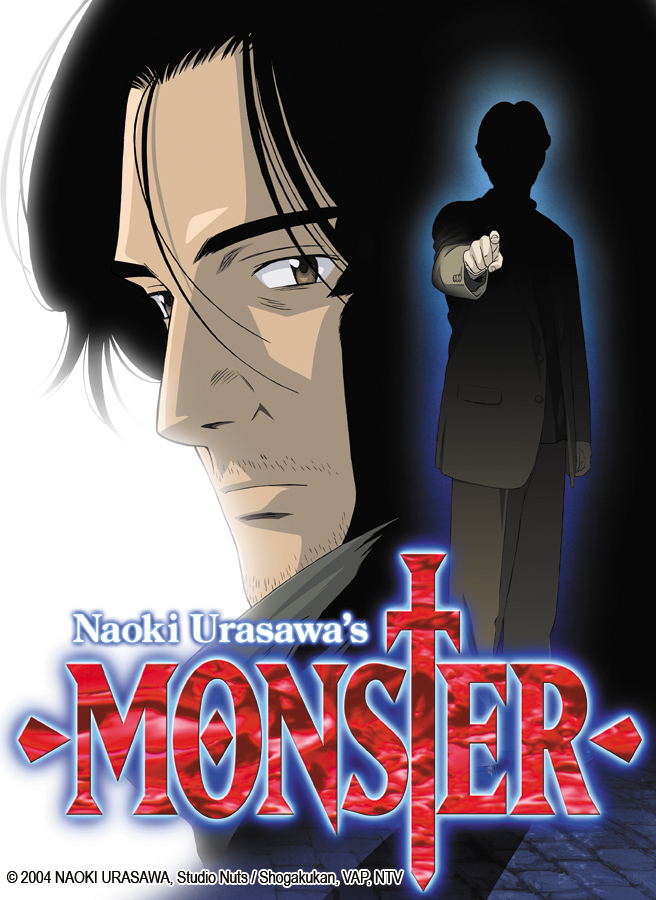
Anime Review: Monster


*Gulp* Where do I begin? I mean, how do you review this thing? Monster is, honestly... it's Monster, how can I sum this thing up? 

Well, I'll try anyway.

It's a long, fast-paced, action-packed, dark, depressing, hopeful, light-hearted, beautiful, horrifying masterpiece. No, I did not use too many adjectives. This is not for the weak-minded, folks! Do not enter without doing some soul-searching first.

Monster follows the struggle of Dr. Tenma, a brilliant neuro-surgeon, and Johan, a young German boy who's essentially the anti-Christ. Johan, with a bullet in his brain, comes under Dr. Tenma's care and, what can only be described as an act of self-definition, Dr. Tenma fixes him. Dr. Tenma gets a lot of grief for healing the boy due to some political maneuverings and, in his despair, says that all the people giving him trouble should die.

In front of the comatose Johan.

What do you think is going to happen?

Well, I'll give you a hint: they don't go to the park for ice cream.

Anyway, eventually Tenma finds out that his sudden fortune was made possible by Johan's acts of violence, and resolves to go and kill Johan. He meets up with a lot of people along the way, finds out what Johan is and where he came from, and just how screwed up the bugger is.  And that's all I can tell you about the plot. No, really! In good conscience that is all you are allowed to know, and even that's saying almost too much. This is because Monster goes through a lot of material. Considering that it's 74 episodes long, you'd think that that's a no-brainer, but consider things like Narutard for a moment and you'll get my meaning. A LOT happens in this show. Every single episode is jammed to the brim with plot, character development, and philosophy. I lost track of how many characters were introduced and then given sufficient (at worst) development. Each person is given their due in a stunningly horrifying way, as they encounter Johan and learn to deal with the presence of such a malevolent being. 

Despite it's length, Monster does not feel all that long at all. You'd think that 74 episodes of a good anime would feel long, right? No, not this one. Monster grabs you by the hair and drags you along, demanding your full and undivided attention as it shows you the horrors of... everyone? Johan? Tenma? Lunge? Grimmer? Anna? It's hard to explain in a review, and even harder to understand at some times what the show is trying to do, right up until the end when it becomes astoundingly clear what's going on. I wish I could tell you more without ruining it, really I do, but this is a show that really needs to be seen without spoilers for the greatest effect. 

Yes, you have time for something like this. So go watch it. Now. I'll see you at The Three Frogs when you're done, with beer in hand. And I don't even drink beer!

(WARNING: If you don't like your anime anything less than clear-cut and juvenile, don't watch. Please, for everyone's sake. Thank you)

Friday, May 24, 2013

The REAL Mouse Guard Review


What the hell's so appealing about playing with a bunch of mice? Well, you won't know til you play, right? I mean, I rolled my eyes at first, I'll admit. Then I played a session, and stopped rolling my eyes, and realized this is possibly the best game Luke Crane has ever made. It's simple, but has all those crunchy bits that make a player like me jump up and down in happiness. It's strategic, but not convoluted. And, in a day where people try to make epics and fail, this game intends to be on the shorter side of things, allowing you to put as much as you possibly can into each Year of game time.

Mouse Guard is based upon the comic series by David Petersen. I've read Fall 1152, and am eagerly looking forward to reading the rest of Petersen's volumes. Basically the mice decided to band together into a loose confederation of city-states so they won't get eaten anymore. The Mouse Guard are made up of mice who go around and make sure everything works. They're outside of all jurisdictions, can travel where they will, and sacrifice all they have for the sake of their brethren.  It's a story about facing a world that doesn't love you and coming out on top. It's a tale of survival against all odds. That's pretty heroic.

Mouse Guard, while based upon the RPG Burning Wheel, really is it's own machine. I'll do a little bit of comparison, but only because there will be some people who have played Burning Wheel and will need some serious guidance on playing this right. I know I did.

Character Recruitment
Oh, the length of time spent making characters is amazing. Go through the questions provided, and your whole group will have a character in an hour if they're n00bs. That's a feat a lot of RPGs can't boast of, especially Mouse Guard's crunchier cousins Burning Wheel and Burning Empires which can take quite a long time for people who are new. You come up with where your mouse was born, his parents, a friend, an enemy, and other details like that. You then figure out how old your mouse is and at what point he's in the Guard rank-wise, his skills and stats, his traits, his Belief and Instinct, and then finally his Goal for the session.

G-BITs

Each character has what I call G-BITS: a Belief, a Goal, an Instinct, and several traits. These help define who your character is underneath all the numbers and stats, allowing you to know who you're playing. The G-BITs are the heart of MouseGuard, plain and simple.

A character's Belief is a simple ethical statement. An Instinct is a specific reaction to a specific circumstance. And a Goal is, well, a goal that can be accomplished inside a single session of play. It changes every session.

Traits are a little more complicated, and are actually more important than any of the other G-BITs. Traits are your chatracter's distinguishing characteristics. Does your character have a bad temper? That's a trait. A long tail? That's a trait too. Sharper teeth, honorable, cowardly, impulsive, or thoughtful? Those are all traits. Your characters use the Traits in-session to help guide the direction of the mission, for good and for ill. There are three levels of Traits, and each level gives you a different, but more powerful, advantage. We'll get more into Traits when I talk about the way the session works.

Basic Dice Mechanics
Mouse Guard is a d6 dice-pool game: roll a number of d6's equal to the number of the stat or skill. 4's, 5's, and 6's are successes. You want to equal or beat the Obstacle, or Ob that the GM set up. Fail? The GM can either hit you with a Condition and let you get what you want, or he can twist it to something new and worse. Fail that Pathfinding test? You find a path alright... right into the den of a snake. Roll for combat, the snake's going to try and kill all of you! Let It Ride is a rule that means that the results of your one roll are applicable for the same test in the same condition. No more trying to re-roll your Scout over and over again to get a better stealth result, you're stuck with the first one. Same with successes and whatnot.

Extended Mechanics
Mouseguard has what are called extended mechanics, meaning that it has a section of gameplay where you do the basic mechanics a little more spread out. You and your opponent plot out three moves ahead, and play them, one at a time, rock-paper-scissors style. Both actions resolve at once, you don't have to worry about initiative. The system might sound a little weird to RPG vets, but if you do it enough it'll become second nature. There are four types of actions you can choose: Attack, Defense, Maneuver, and Feint. The four abstracted actions can be used for any type of conflict (and there are many, such as argument, speech, fight, etc). It might seem a bit abstract at first but, again, once you get used to the system it's incredibly flexible and tense. You have to make your plans, and hope they work.

The Way a Session Works
At the beginning of every session the GM picks from four different types of threats: animals, mice, weather, and wilderness. He chooses two, and those are the major threats of that session. The players are supposed to know about these two threats. For instance, they can be told by the GM that a flashflood has wiped out a town, and that a wolf has come to feast upon the wreckage. What a set up, get over there guys! The other two threats left are then reserved as twists, to be sprung upon the players when they fail rolls. The GM can also, if a player fails a check, let him succeed and hit him with a Condition, which are Tired, Hungry/Thirsty, Angry, Injured, and Sick. Each of these Conditions have a set of penalties for the character, and may only be recovered from during the Players' Turn (more on that in a minute).

The session officially starts with the GM's Turn, where the players beat the crap out of the mice. Notice I said players, not just the GM. The GM's turn is the beginning and the rising action of that session, where the mice struggle to make it against the harsh world. Players may join in by using their Traits to hinder their characters, earning a resource called checks. Once the GM runs out of Twists, he is supposed to end the GM's turn, leaving the players to end the mission in the Players' Turn. The Players' Turn is where the players become proactive, allowing them to finish the mission however they want. To do this, they must spend the checks they had earned by giving their characters trouble. It is vital to understand this: the players must put their characters through trouble in order for them to succeed! Otherwise there aren't enough checks to go around, and the players will fail the mission, and probably not get as many rewards as they'd like.

Rewards
Rewards are given at the end of every session, when all the players' checks run out. There are two types of rewards: Fate points and Persona points. Fate points allow you to reroll all 6's in a single roll. You get Fate points for acting on your Belief and attempting to fulfill your Goal but failing to do so. Persona points do two things: they allow you to tap your Nature stat and add those dice to a roll (at the risk of harming your Nature, a stat that really shouldn't be too low or too high), or just add one dice per point spent (to a maximum of three). You get Persona points for achieving your Goal, role-playing well, contravening a Belief in play, for being the most useful character all-around in the session, or making that one roll that was absolutely vital to the quest.

The game plays very smoothly, and is so well designed it will definitely trip up any RPG vets. To the vets I have this advice: throw out all preconceptions of all your previous games, including Burning Wheel, because they won't help you here. In fact, assuming that this game works like anything else will hurt your experience. Read the rulebook (shocking, I know) and play the game exactly as written! You will not be disappointed. Mouse Guard is a wonderful game, possibly the best Luke Crane and co. have ever written. The text is clear, the rules are amazing, and the artwork is gorgeous. You can't get a better deal. You just can't.

Tuesday, May 7, 2013

The REAL Burning Empires Review (Second Attempt)


Everyone knows one of those GMs: the bastards. The ones who seem to get off on the suffering they inflict, who try as  hard as they can to loophole your characters into oblivion and, when they do, crow about it? Yeah, him. Picture his face. Then picture the look on his face when you tell him there's a game that's designed specially for him. Then imagine the look on his face when he reads the rules and realizes that you can punch him back in game, and that the playing field has been mostly leveled. 

Isn't that satisfying?

Welcome to Burning Empires.

Burning Empires is based off of Burning Wheel, the famous indie fantasy RPG (which, if you've been reading this blog, you really don't need another intro to). And by based I mean it looks really similar until you start to play it. Because of this, it's really not helpful to look at Burning Empires in terms of how it relates to Burning Wheel, but on it's own merits. So I'll do that. 

Burning Empires is based off of the comic book series Iron Empires, which are about the body-snatching Vaylen trying to take over what's left of the human race in the far future. I haven't read the comics and so I can't vouch for them, but I hear they're very good. Anyway, Burning Empires was made to replicate that series. The central theme of the game is based around what you're willing to sacrifice in order to win the war, and the mechanics do this pretty darned well.  How? Well, first you have to build your world, then your characters, and then you play out the characters fighting for what they believe in even if it means sacrificing a whole lot along the way.

Building the Wheel
The first thing you do is burn your world. You pick from a series of lists and ideas that are in the book, and get your overall disposition (another word for "hit-points"). You decide where the planet is in the interstellar empire that is the Iron Empires, it's geography, it's main government and industry, and all sorts of things like that. There are three disposition numbers per side (human and vaylen) and they're usually in the GM's favor. You decide upon what the general problems of the planet are that the Vaylen can take advantage of, which then informs your character burning. THE MOST IMPORTANT THING TO REMEMBER IS TO USE THE REFERENCE LIST OF IMPORTANT SKILLS FOR EACH PHASE THAT'S IN THIS SECTION. DO NOT MISS THIS, BECAUSE IT WILL WIND YOU UP WITH VERY UNHAPPY PLAYERS. I put that in all caps for a reason (I might have missed it, and my players and I suffered as a result...)

Last thing to do before character burning? Decide who the Figures of Note are. Figures of Note are characters the big dogs of the planet. They're the ones who actually make everything work. You're only allowed to have up to three per side. Each phase features one.

Character burning is the arduous process of making a character. You make this character by deciding upon his history: where was he born? What did he do as a child? As a teen? An adult? and so on. These questions are answered by the concept of lifepaths, which give you the stat, skill, and trait points that you need to build up your character. I'm not going to lie, it can get pretty hairy for a beginner, especially if you're used to something more like DnD where you can just pick whatever you want. Here you will face consequences for each of your decisions, and you will be closed off from some things for good. Trust me, it's worth it! 

Before the mechanical stuff you decide the most important stuff about your character: Beliefs and Instincts. Beliefs are the top three priorities you the player have for the character, written from the character's point of view. They can include goals ("I will save my brother the duke or lose my honor!") to ideologies ("The Burning Wheel is the source of all truth") to a mix of the two ("The Burning Wheel is the source of all truth, and it commands me to protect my brother the duke. I will do so or lose my honor!"). This is not a case of you getting into your character's head and figuring out what he wants: it's naked metagaming of "what would I like this character to be about?" You get rewarded for acting on these Beliefs in such a way as to drive the story forward.

Instincts are the top three gut reactions you find interesting about your character. They can include things you'd figure he'd learn from one his lifepaths ("Never turn down tail")  to gear-related ("Always have a gun at my side") to skill oriented ("Whenever there's nothing to do practice my sharpshooting"). There are very specifics reactions to specific events. You get rewarded for intentionally ignoring your Instinct when doing so would get your character into trouble.

Traits are small bits of mechanical stuff that you attach to your character.They either help with characterization, muck with the game rules in your favor, or muck with the dice.All three are extremely good to have around. You get rewarded for using traits if it pushes the story in an unexpected route or if it hurts your character to use the trait. 

The GM also makes characters for the opposing side. They follow almost the same rules as your characters, with some leeway given to the GM since he'll always be outnumbered in this game. These characters also get  BITs (Beliefs, Instincts, and Traits) who get rewarded for all the same things we just talked about. 

Turning the Wheel
Now that you know some of the basics of making characters and what they get rewarded for doing, let's turn to actually playing the game. Yeah, I know, that was a lot already. Well, it's all worth it. The campaign is divided into three phases: Infiltration, Usurpation, and Invasion. The first phase centers around the Vaylen using the planet's existing conflicts to get a foothold on the world, with the humans unconsciously stopping that from happening (for the most part). Usurpation is focused on the Vaylen trying to get as many of the Figures of Note and other officials under their wing as soon as possible. And Invasion is exactly as it sounds. 

So the first thing you do is decide which phase you'll be starting in. If you want a full campaign start in Infiltration, and work your way up. You then start figuring out your maneuvers. Maneuvers are the big moves of the game. The GM picks his move in private, and then sits back and allows the players to pick theirs. They then start to role-play the characters doing their thing. There are a number of scenes the players and GM gets to use to accomplish their goal. Each player gets one of these scenes. No, you may not do "whatever you want", you should go by the scene structure. Why? It's a competition. You're not just role-playing, you're trying to win! Anyway, at the end of the series of scenes you played out the players and GM reveal exactly which maneuver they picked, and then one character from each side rolls to see what happens in the big picture, which determines how successful you actually are. Usually you're trying to target the other side's disposition with your roll. Once a side is knocked down to 0 disposition the phase is over. It's a really tense roll, I can promise you that. After the maneuver roll everyone gets rewarded as mentioned above, with Fate, Persona, and possibly Deeds!

Fate points allow you to re-roll 6s on a single test. They're a nice last-minute stopgap against failure. Persona allow you to add one die per point spent, to a maximum of three. And the almighty Deeds point lets you double your base stat or skill. You also get rewarded for roleplay, being the most useful, making that big roll that would have made things go badly in your failure had it been anyone but you doing it, and so on. After you're done with rewards, you play another maneuver, and then give out rewards again. 

The Physics, Large and Small
Oh goodness, there's MORE?? Well, I could lie and say no, but then you leave out some of the best parts of Burning Empires! S'yeah, there's more. Suck it up and keep reading.

Burning Empires is a d6 dice pool game: your characters have numbers next to their stats and skills, and that's how many six-siders you roll. 4-6 is a success. You're trying to beat the target number, or Ob, with a certain number of successes. Failure means the GM (y'know, the opposition?) gets to muck with your intent somehow. You may help each other and use FORKs (Fields of Related Knowledge) to get your skills higher, but that'll mess with your advancement. Skills and stats increase as you use them, there's no leveling system to save anything you don't use all the time. You may also train skills in game, but I don't recommend that, since you'll just be handing another win to the GM, who is already cackling with glee as he imagines hulling your character and getting to use him on his side. Finally, there's the Let it Ride rule, which means you can't roll multiple times for the same test. If you succeed, you're successful as long as the situation doesn't change in a meaningful way. If you fail, the same applies. You have to then try to change the situation itself. But considering that, thanks to the scene economy you'll probably only get one die roll a maneuver (more if you pick the extended conflict, but we'll get to that) it's a pretty big deal whether you succeed or not.

And then there's the extended conflict mechanics, which are The Duel of Wits and Firefight! All these work the same basic way. It's essentially the maneuver roll put into a smaller context. Choose three moves in secret, and then play them against the other side, one at a time. If no one's disposition was knocked out by that volley, pick another three! And don't worry, you roll a smaller disposition then the one you did for the phases. This doesn't directly influence your larger disposition. Do not let your DnD-instincts (if you have any) get in the way of these extended conflict mechanics. Once I got used to it, I found that I couldn't really go back to standard initiative. Why? Well, this is really dynamic and intense. You literally have no idea what is going to happen next. Firefights! in particular get unpredictable, with characters in mortal danger from the very start. There are no smaller fight mechanics beyond a simple versus test, so if you want to get anything done, this is it! If you have preconceptions of what fights and arguments should look like, throw them all out and give this a try.

There's a lot more going on, but frankly you don't need to know about it to get the game or not. And by this time? You should probably have a good idea of whether you want it or not. If you're a die-hard rules-lite dude, do NOT get this game. Just, save yourself the 45 bucks (hardcopy, there's a pdf for 20) and find something else. For anyone else who wants to take a shot a war-game RPG, this here is a good bit. There are a lot of crunchy bits that move around and look confusing, but if you get past the learning curve and give this game an honest shot I promise you'll be very happy you did. In the (so far) one time I ran this game, the players had a blast. We were playing on a prison planet of liquid oxygen, and as a last-ditch effort they blew up the whole planet rather than let the Vaylen get it! The role-playing was incredibly intense, and the plot was moving like a roller coaster. The mechanics make for a very intense and fast game, one that will leave you a bit breathless and surprised. 

Give it a shot. You won't be disappointed.